
IT
EN
The banquet was one of the most important elements of Etruscan social life, as it was in the Greek world, from which it derived: it was a status symbol, which denoted belonging to a high social class. On this table, for the presentation and consumption of foods and beverages, purified and black bucchero ceramics were widely used: these were of local production. Next to more common forms (bowls, plates, pitchers), some were imitations of Greek products, such as the cup with two handles (kylix, in Greek), used for the imbibing of wine. Typical productions from the area of Fiesole include basins placed on a high base, derived from a metallic model. In the settlement of Gonfienti there are numerous remains that bear witness to domestic religious worship. Linked to this context are small dipper-cups, with a shallow conical base and surmounted loop-handle. They were used during the rituals dedicated to the tutelary spirits of the family, to gather the liquids.
 Cup by the painter Douris. Attic red-figure vase; on the interior, a depiction of Eros in flight, who crowns a bearded man
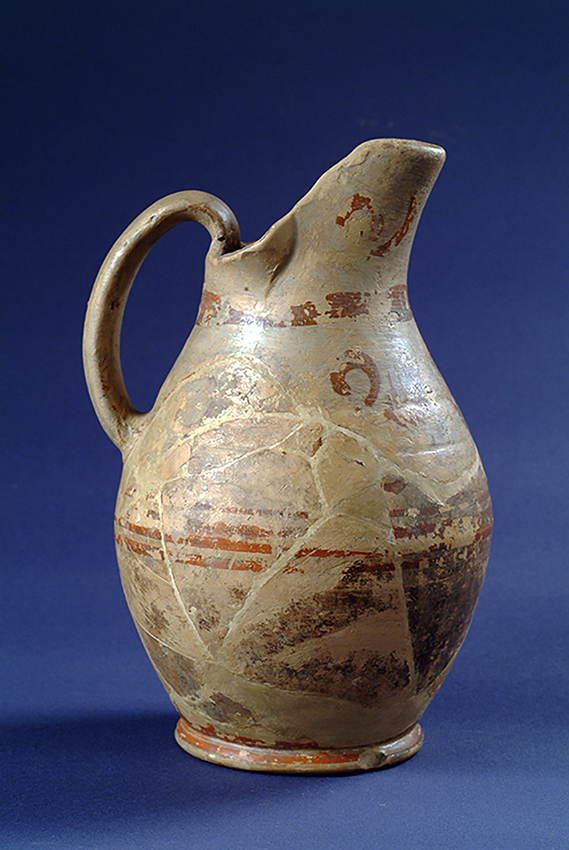 Jug with painted decoration, discovered inside a well
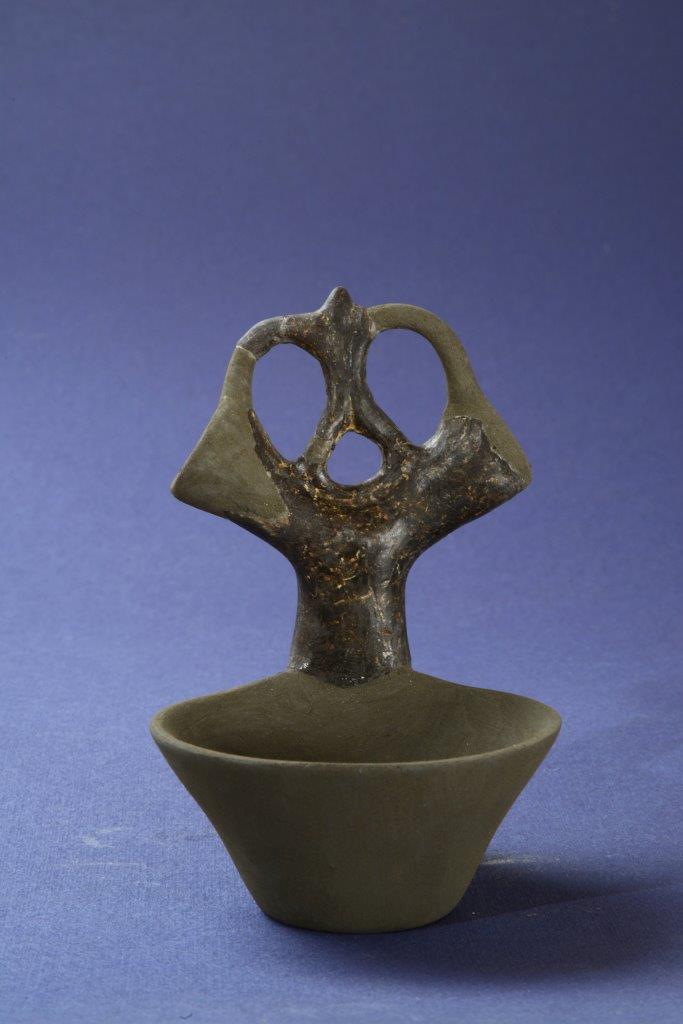 A ‘bucchero’ (dark black earthenware) handle with hollow truncated horns, connected by an openwork motif with a stylized human figure
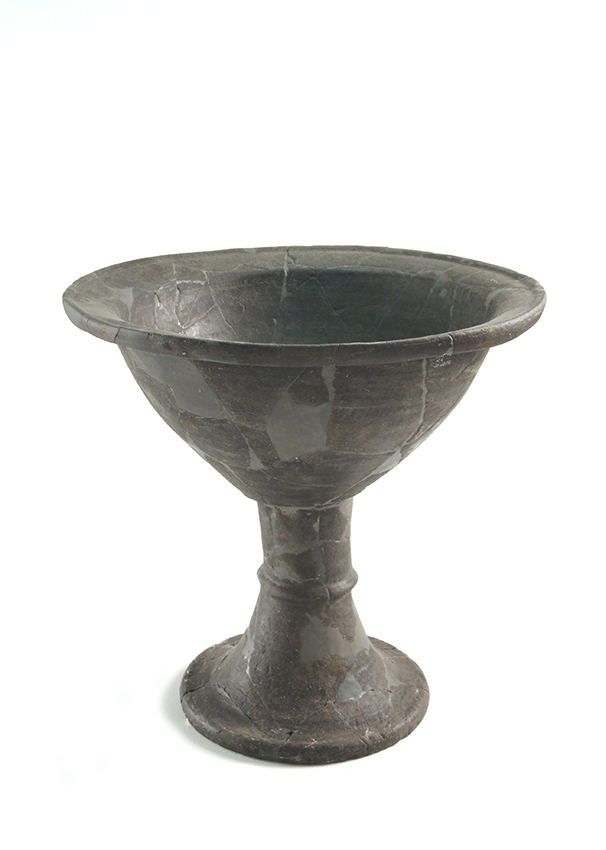 Basin on a high imitation metal foot, of local ‘bucchero’ ware production.